Remembering Jordan

Creating art has changed for me in many ways. My eldest son, Jordan died in a car accident in March this year. He would have turned 26 on the 18th of March. For a few numbing months, lost in the shock of it I thought I would never paint seriously again. I remember in those first few weeks I took to watercolours, but in my mind they were just doodles. I felt I’d lost my mojo. I was and often still am overwhelmed by the grief that can be so intense words alone cannot describe it.

I’m back painting again. I only have a very short attention span nowadays, preferring to numb out emotion through whatever means easily accessible (food, alcohol, Netflix. Anything mindless) . But I’ve come to realise that through creating artworks ‘about’ Jordan, I’m also creating new memories ‘with’ him. This is an important distinction for me, and I suppose it is based on the belief that he is still ‘alive’ in the truest sense.

After a death you are still in a relationship with the person, however, now because of the chasm of death, that relationship is connected through pain. That’s why many grieving parents say they will never ‘get over’ the loss of a child, and they don’t want to either. That child is a part of you. A deep and indelible part. A parent-child relationship is an unconditional one where the parents’ role as nurturer causes such a strong psychic connection that their concern is always centred around the child’s safety and thriving.

We are accustomed to, as parents, to worry about our kids. We can be heartbroken and concerned for them. We suffer with their sufferings and rejoice in their triumphs. This doesn’t change after death. Through my artwork in some ways I’m saying, “are you ok Jordan?” “You are loved” “you are remembered” “You are amazing” , and a wonderful quote from one of his friends, “heaven adores you”. I suppose art has given me a way of nurturing him, including him and yes of course, remembering him and his time on planet Earth. I want him to be forever remembered by everyone who knew him. And if you know me I want you to know him, too.

When I studied art therapy I learnt about how art can facilitate these ‘altered states’ It’s not as mystical as it sounds. Altered states are just below the surface of our everyday pragmatic existence. You experience them when you are deeply involved in something. It’s a chance for your subconscious self, to come to the foreground of your awareness. This always happens when we dream, because we have no filter and our minds are not preoccupied with the mundane. When Jordan left us I realised how often I straddle these two states. I long to become aware of the spiritual, to learn how to notice little things he may be saying to me. Yet I am so deeply aware of how difficult this is. It’s frustrating, when we are alive we are truly bent away from seeing anything spiritual. So seldom do we scratch the surface of our existence. The times he has sent me a message, and I have been ‘awake’ enough to receive it, are held very deeply in my heart.

Because being creative helps us access this ‘altered state’ or dreamlike state of awareness, it has helped me understand my own pain, just a little bit. I’m someone who will feel something deeply then minimise things once I’m past the pointy end of my pain. A painting holds up a mirror in this way. When you are very emotional anyway, you develop tools to numb things over, so validating an experience is important. On another level, there’s the things we don’t know about the ocean that is our psyche, and engaging in art can be surprising. It can reveal things previously outside of our awareness.

So many people who have lost their precious children have also lost purpose. What’s the point? What’s the point in doing anything? Everything is meaningless. Life is about surviving until we can be with them again when we die. It’s only been nine months for me. So I have no answers and I feel like this often too. All I know, really on a very basic level, is I’m grateful for my art. I don’t even care what others think about it now. At the end of the day, it’s a comfort. It’s a comfort because of the tangible link it has to the Spirit. Music is the same, as is writing.

I will always remember Jordan saying-not that long ago- “oh cool mums getting her paints out. I love it when mum paints!”

A bit of mixed media

I’m teaching my 3/4 class how to include foreground, middle ground and backgrounds in landscapes. We used tissue paper and paint to make the foreground appear closer. We also made some trees out of torn newspaper. They painted on some recycled lino donated from the Pre Primary classroom. They look pretty cool so far, can’t wait til they add the finishing touches with oil pastel..although, these ones look pretty good as they are 😊

Acrylics vs Oils

After using exclusively acrylic paint for several years, I was recently inspired to take up the oils once more. I have only done a handful of paintings with oils, and my reason for ditching them was due to impatience. I reasoned that acrylics dry faster, so you can paint over the top creating layers of colour for interest. Oil paints are far more sumptuous colour wise in my opinion, however. For some reason I never realised that you can simply wipe away areas with a turpsy rag or brush, making paintings easy to renovate just like in acrylics (one of my reasons for turning to acrylics).
Oil paints seem to cover large areas of canvas more easily and you feel a bit like a sculptor when using thick paint (note to self: buy a pallet knife, a very useful tool for scraping back paint, adding sharp areas and cleaning the pallet!)

For those colourists who are concerned with detailed accuracy ( that’s me only sometimes), acrylic colours flatten off and change to be slightly lighter. I have noticed this when doing skies or faces, but because my style is somewhat expressionistic, this factor has not really bothered me. I often work on textured recycled canvas anyway, so I see it as part of the overall effect akin to varied brush strokes. The flattened effect of acrylics is something I address using loads of glossy varnish. The reason oil paints don’t change in their colour or consistency is because oil paint doesn’t actually dry, it cures.

I was confused about the mediums to use to thin oil paint down, but after asking a few knowledgable people, I decided to keep it simple: odourless artist quality turps to was brushes and wipe back areas of paint, and the Art Spectrum no.1 medium for mixing. The mediums are a mixture of linseed oil and artist quality turps, so it’s just more convenient than doing it yourself. The no.1 medium is the thinnest (paint will crack later if you apply to much linseed oil under thinner applications).

So… The verdict? At the moment I am in love with oils but not inclined to give up acrylics either. If I do plein air work, I will go for oils because you don’t need water, and you don’t have the problem of paint wastage due to speedy drying. Acrylics are wonderful when I want to paint lots of layers quickly… And just when the mood takes me, they lend themselves to different marks, and are great in mixed media operations.
image

Acrylic paint. I use atelier interactive, usually. At times it’s anything I can afford. I bought some cheapies recently (global) which were not very opaque, so a bit frustrating to use. I’ll probably use them with my kids.


image

My oil paints. They are art spectrum mostly.


image a close-up of an acrylic painting. You can see how it ‘flattens’ when it dries (especially in the darker areas)

image a close-up of an oil. I used heavy brush-strokes. Colour and shine holds. Although I will probably still varnish, because I love shine!

Unearthing Old Stuff

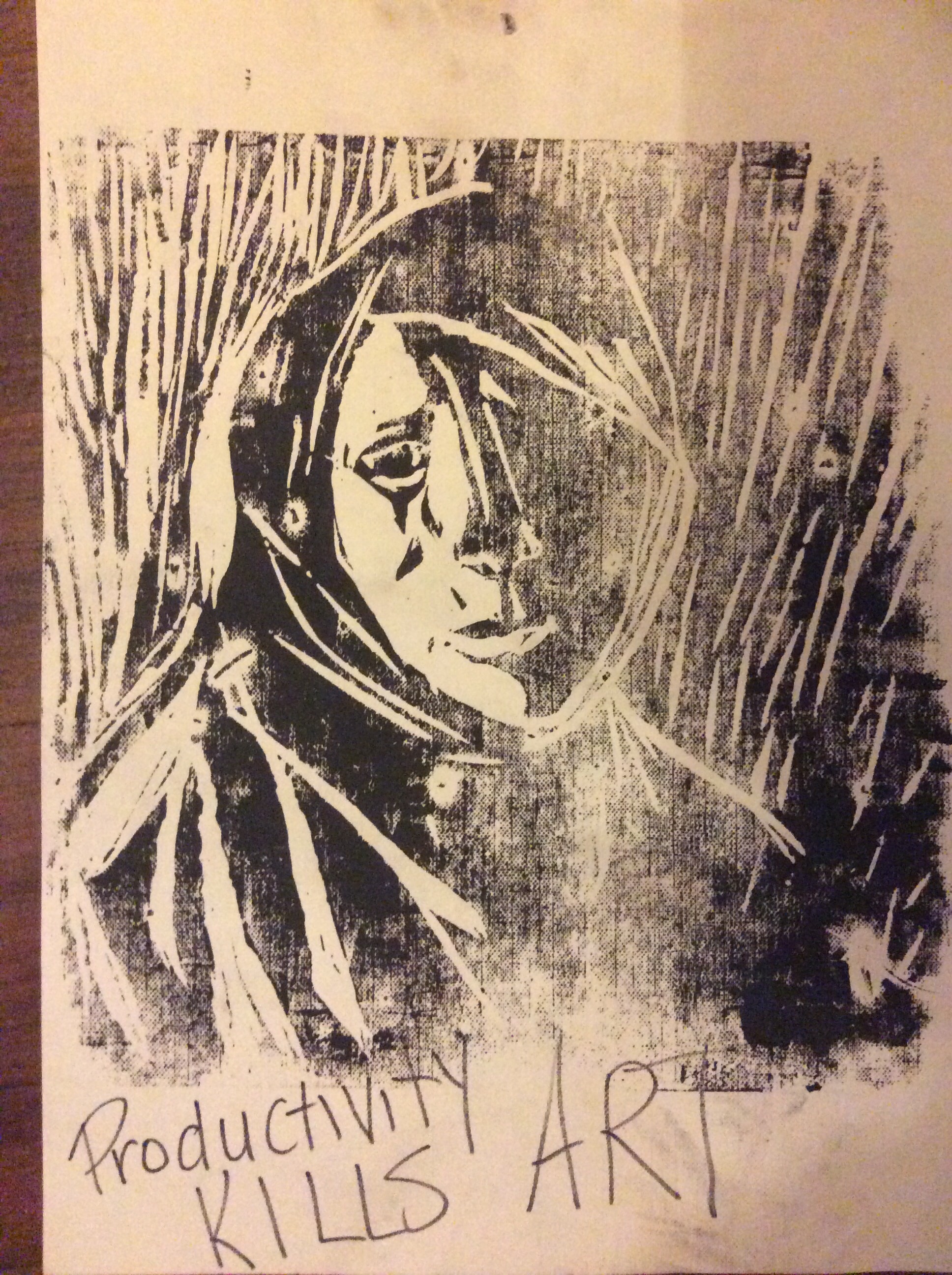
My latest goal is to convert our bedraggled old caravan into an art studio. I spent a couple of hours today getting rid of some of the clutter that had been stored in it. Amongst the rubble was some artwork from 5 or so years back..not so long ago, I know, but long enough to bring a bit of nostalgia. I particularly love the Lino print I did, with the words “productivity kills art” scrawled on it with an artliner. This was part of an inner protest against the industrial world’s way of mass producing everything, including “art”. I believed then, and still do, that our creativity is borne more from ‘being’ rather than frantic ‘doing’. Creativity will flourish when we slow down enough to see the extraordinary in the ordinary.
Looking at my old, and I guess ‘rejected’ artworks helps me appreciate even more my inner yearnings to be the person who can see the amazing, the divine, amongst the ordinary things (I’m not there yet). It makes me realise once again how much I long to create and to ‘be’ an artist. This is a desire that has been in me ever since I can remember. The motives may have been differentiation or perhaps passive rebellion at some point. But whatever…the dream has clung tenaciously all these years, and I must give it credence as I meander along my way. The endless flurry of ‘activity’ is the enemy to my dream.

I read something recently that said that successful people say “no” a lot. I guess that’s because they have certain objectives, and they guard it as precious….they will not agree to anything that does not further their goal or vision. food for thought, I can hear an echo in that famous old Shakespearian adage “this Above all : to thine own self be true”

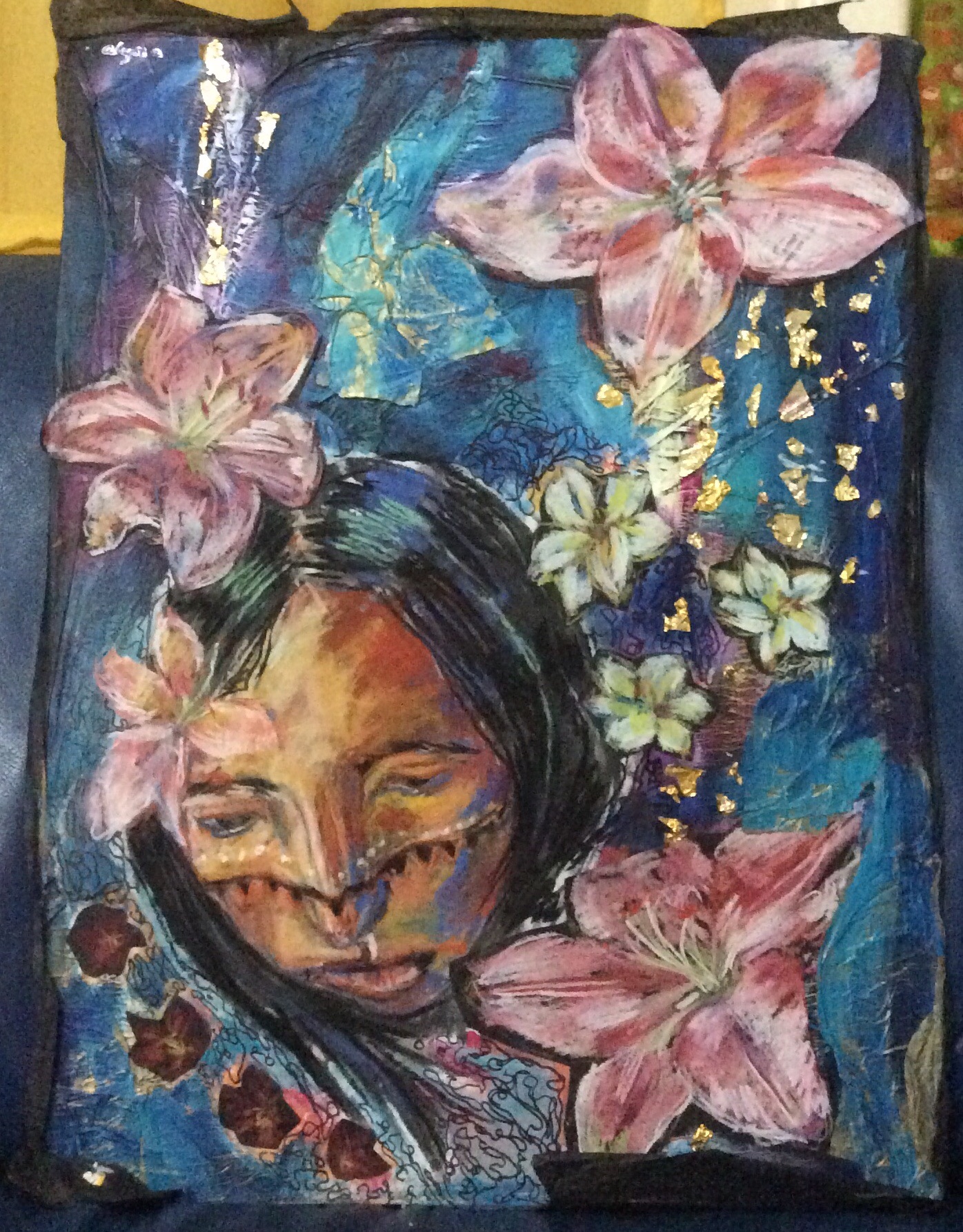
imageimageimage

A work in progress, and some thoughts on artists block

image
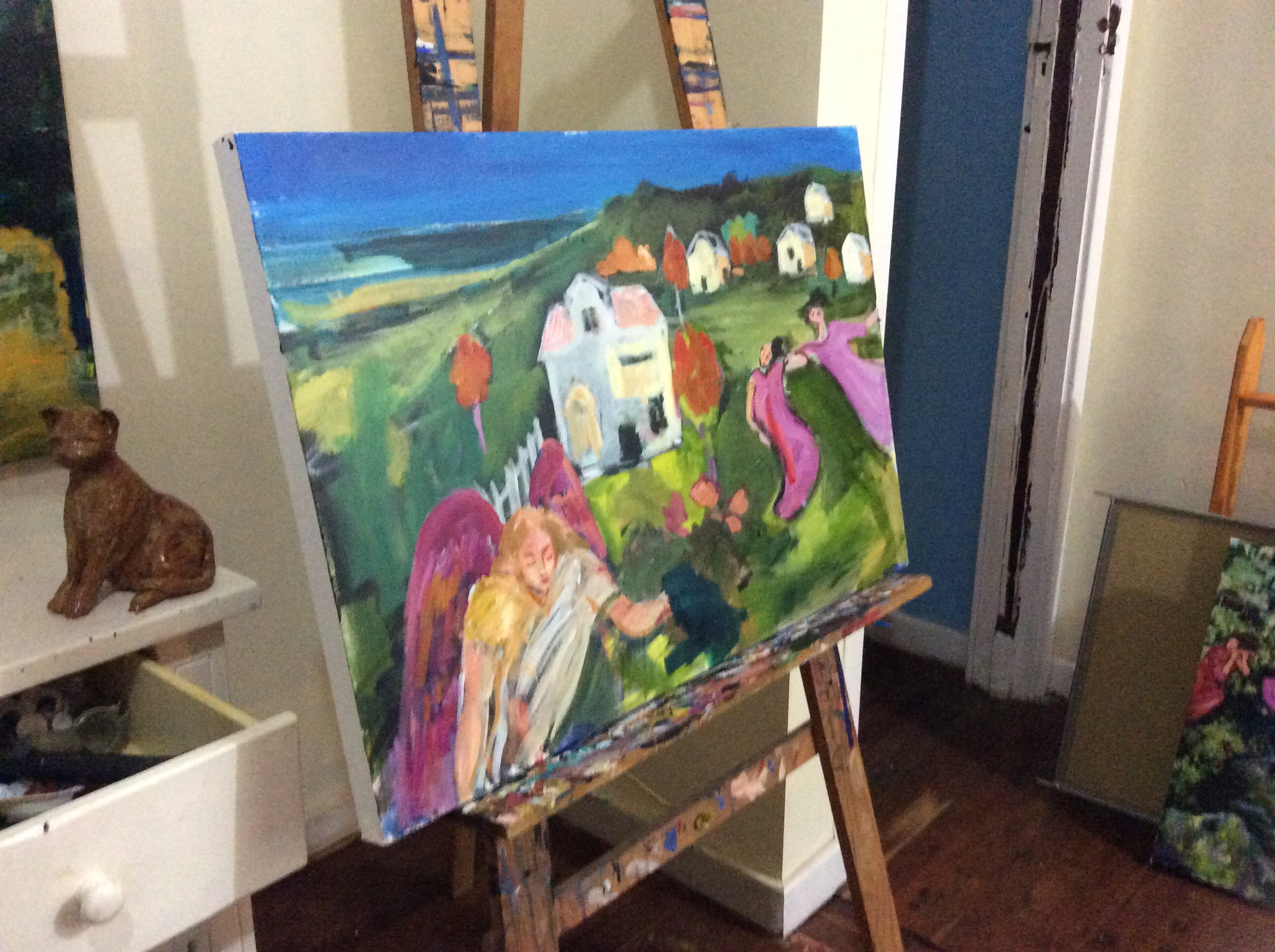
Here is another work in progress. I am slowly wading through my artists block, and am hoping to create a body of work that shows the spiritual world interacting with the temporal…or at least creating landscapes that fuel the imagination for things that we don’t see with physical eyes.
So…on the topic of artist block, something that I have been mulling over a lot, to the extent that I sought advice on Google (sigh). The most worthwhile thought has been, ‘just show up, sooner or later your muse will too”. Good advice…but still not without frustration and self doubt; these re-occurring feelings as the artist waits for and searches for his or her illusive muse.

On the flip side working through this block has helped clear up old cobwebs. I am starting to have much more clarity and focus- this is a very big nod towards creativity being a healing agent. I’ve been thinking about a book I used to read quite often; “Art Heals: how creativity cures the soul” by Shaun McNiff. In this book the author likens creativity to a kind of priestly and intensely spiritual engagement, capable of bringing profound inner healing. This is relevant to creative block in the sense that it puts it in its place: we are all creative. Our creativity moves us beyond the temporal and into the spiritual- a place where the subconscious reigns. Therefore to be blocked artistically is akin to being caught up in the cares of the world. Our creativity, our muse beckons us beyond this. To find our muse is essentially finding connection with God, since (I believe)it is a force beyond ourselves that heals, nurtures and awakens.
I am not implying that overcoming creative blocks simplistic in a “just get in touch with God” way. It’s a precious process, we wrestle with our own psyche and who we believe god and creativity to be. When I look at art history it’s like a living pictorial story of how we have tried to understand the divine, the universe, ourselves. Creative blocks are perhaps the chopping board of ideas and deeper thoughts. It’s a very precious place.
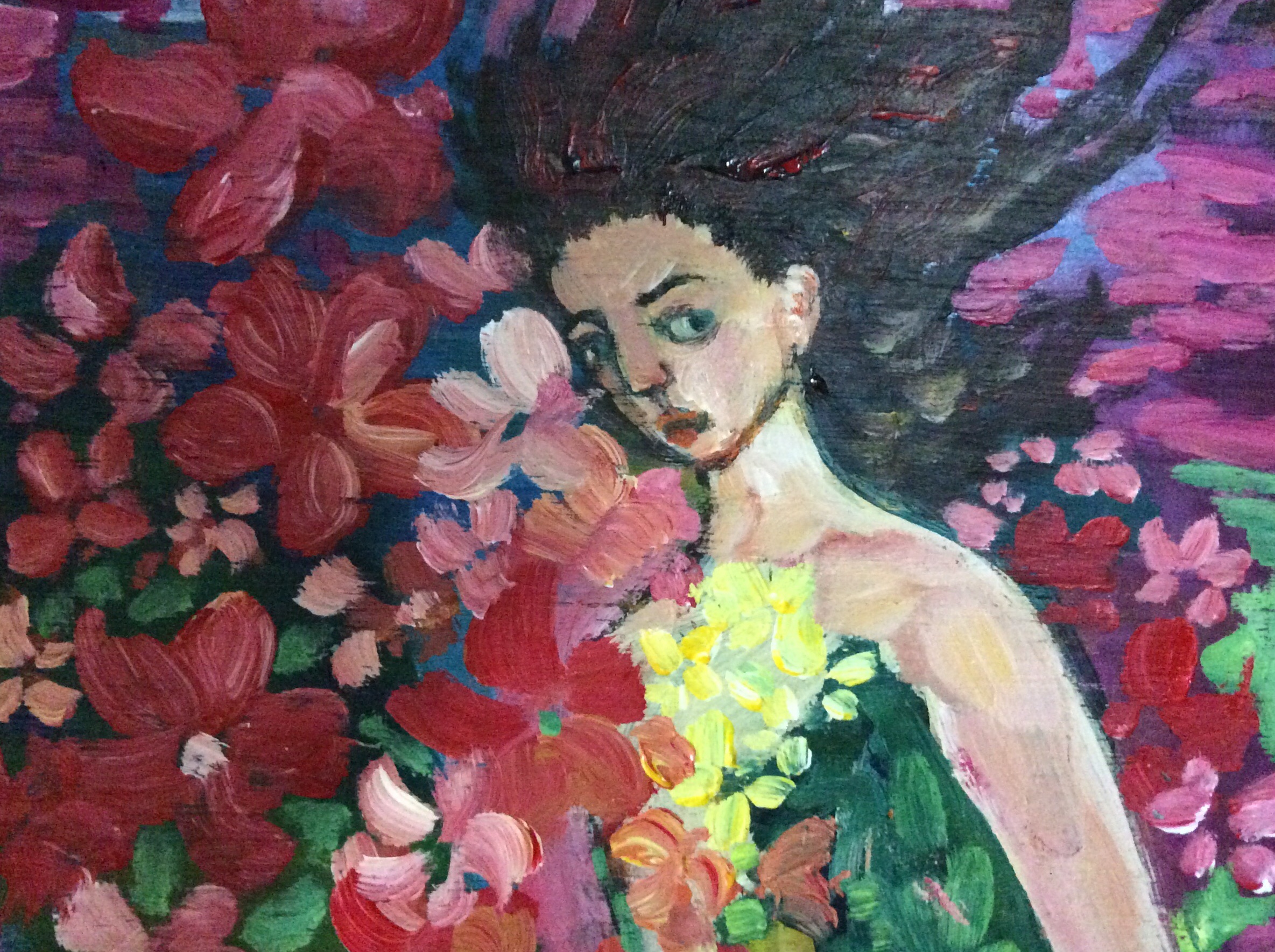
On a lighter note. Below is a little painting I created tonight on a scrap if board, totally unconcerned about the final product; just enjoying applying paint, leftovers from my pallet. It’s a great example of how #1 working on more than one artwork at a time is good practise #2 when you are relaxed and don’t care if things work or not, things seem to work well!

image